Traditionally, the success of a bedroom remodel was measured by the “reveal moment.” Clean lines, matching tones, a sense of “done.” But that’s no longer enough, not for people actually living in it every day, and not for investors who expect spaces to perform over time.
Because the truth is simple: most bedrooms don’t fail visually. They fail quietly, in use. In the small frustrations that build up, awkward movement, uneven lighting, poor airflow, restless sleep. The kind of problems you only notice after the money is already spent.
That’s why modern design has shifted. It’s no longer just about taste. It’s about testing reality before reality is built.
1. Spatial Scanning and Digital Mapping: Ending the “We’ll Make It Fit” Problem
Every bad layout starts with casual optimism; it should fit, we can probably adjust that later, it looked fine on paper. Then life moves in, and suddenly doors clash, pathways feel tight, and the room starts negotiating against you instead of working with you.
Modern design removes that risk completely.Instead of guessing, designers now capture the room as it actually exists using laser scanning and digital modeling. The space is rebuilt virtually, down to the millimeter; not as a concept, but as a digital twin of reality.
Then they stress-test it:
- How people move through the space, not just where things sit
- How doors, drawers, and circulation paths behave in motion
- Where hidden conflicts will happen before they ever exist physically
Professional Bedroom Design Services leverage kinetic space planning parameters that help bridge the gap between human intent and real-world execution, ensuring a highly responsive, reliable sanctuary that adapts entirely to the way you live.
The result is simple but powerful: nothing is left to “figure out later.” The friction is removed before it has a chance to become expensive.
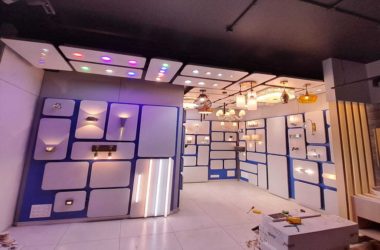
2. Lighting Intelligence Systems: Designing Mood Instead of Just Brightness
Most bedrooms don’t fail because they lack lighting. They fail because the lighting doesn’t know when to change. Too harsh when you’re trying to unwind, too dim when you need clarity, no transition between alert and rest; just a single static condition trying to do everything.
Read More: Backlit TV Units & Wardrobes: Interior Glow Ideas
Modern systems treat lighting differently, as behavior, not as decoration. Designers now simulate how light enters, shifts, and fades across the day, then build responsive systems around it.
That means:
- Light that follows natural rhythm instead of fighting it
- Layered scenes that support different emotional states
- Automation that removes the need for constant manual adjustment
What changes here is subtle but important. The room transitions from feeling “turned on or off” and starts feeling alive by adjusting in the background without demanding attention.
3. Acoustic and Material Diagnostics: Fixing What the Eye Can’t See
A room can look perfect and still feel wrong; too echoey, overly sharp, and too synthetic. Or just slightly uncomfortable in a way you can’t immediately explain.That’s because comfort isn’t only visual, it’s physical and neurological. Sound, air quality, and surface behavior all shape how your body relaxes.
Modern interior designersdon’t treat these as afterthoughts.Instead, they evaluate materials based on how they perform, not just how they look.
So decisions become intentional:
- Finishes chosen for how they absorb or reflect sound
- Materials selected for healthier indoor air, not just appearance
- Layered textures used to soften both noise and temperature shifts
The result isn’t “luxury” in the traditional sense. It’s elevation of comfort while reducing stress on the senses, less background irritation, and less invisible tension in the space.
4. Photorealistic 3D Visualization and Virtual Walkthroughs: Removing the Risk of “It Looked Different in My Head”
Most hesitation in bedroom design doesn’t come from bad ideas, it comes from uncertainty.You stand there with samples in hand: a fabric here, a paint tone there, a flooring option that looks slightly different in every light. Individually, everything feels fine. But together? That’s where doubt creeps in. And when people can’t clearly “see” the outcome, they either play it too safe or make expensive decisions they regret later.
The old way of designing relied on “mood boards,” a collection of fabric swatches, paint chips, and photos of individual furniture pieces pinned to a board. While helpful, it still required a massive leap of faith from the homeowner to imagine how all those separate elements would look when scaled up inside their actual four walls. However, modern design solves this gap by removing imagination as the only testing ground.By using advanced software originally developed for high-end video games and Hollywood visual effects, designers have completely eliminated that guesswork.
What makes this powerful is not just the software, but how it’s used:
- Real fabric textures are digitally recreated, not approximated
- Wood grains, paint finishes, and surface reflections behave like they do in real light
- Morning, afternoon, and evening lighting conditions are simulated to show how mood actually shifts
This isn’t about selling an idea, it’s about pressure-testing reality. That way, the experience becomes interactive, scale becomes obvious, balance becomes visible, and doubt starts to disappear. And that changes the entire decision-making process.
In practical terms, this means fewer regrets, fewer costly revisions, and a far more confident path from concept to completion.
Read More: Ways to Create Warmth in Commercial Spaces Without Making Them Feel Residential
In essence, with the explosion of direct-to-consumer furniture apps, social media inspiration, and instant shipping, homeowners are buying more items than ever. However, they are buying them in isolation. You see a beautiful bed online, a trendy nightstand on an app, and a rug on a lifestyle blog. When you throw them all into a room, they fight.
That’s where consulting a reliable bedroom designer comes in, guaranteeing a profound shift from just aesthetic decoration to structural correction that aligns your room’s physical footprint with your daily human routines.
By stepping away from impulsive, isolated improvements and looking at the room through an integrated framework, a specialized designer bridges the gap between the perfect sanctuary you imagine in your head and the high-friction reality you end up with on delivery day.