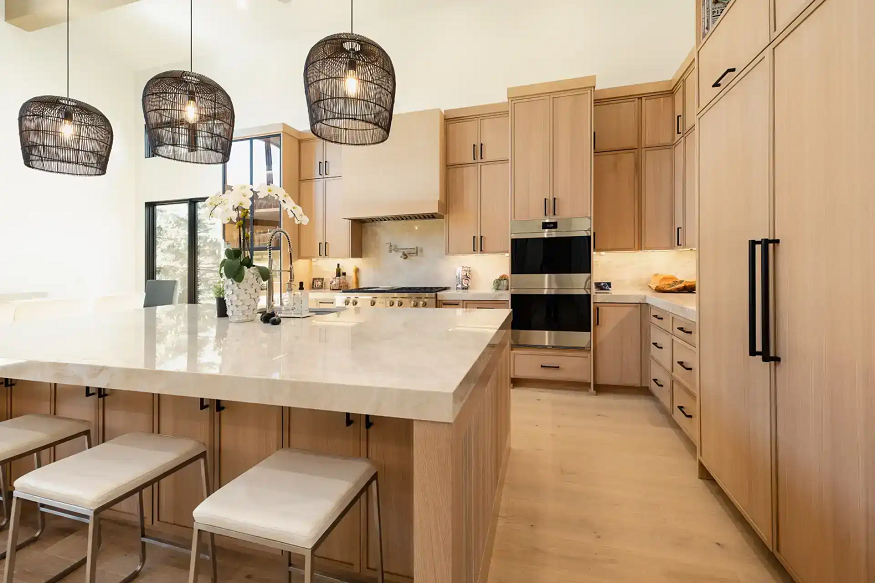
Your cabinet style determines the general appearance and functionality of your space. Therefore, it is an aspectyou should carefully evaluate when renovating or building your home.
The choices are many. And they can be confusing. But worry not.
In this guide, we will tell you how to go about it.
Know the primary cabinet styles
Begin by determining the most common styles.
Contemporary cabinetsemphasize:
- Clean lines
- Flat panel doors
- Minimum hardware.
They tend to employ materials such as:
Read More: The Circle of Safety: Understanding Defensible Space for Wildfire Protection
- Laminate
- High gloss finishes
- Smooth wood
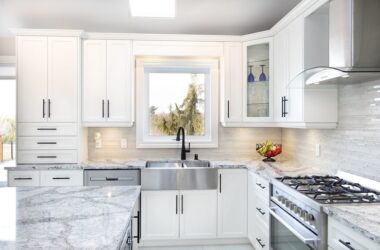
Shaker cabinets are more adaptable. They featurea simple five-piece recessed-center-panel door. They also perform well in modern and transitional areas.
Traditional cabinet styles are more elaborate. They feature:
- Raised panels
- Decorative molding
- More vivid wood coloration.
Every style has its own visual load. To make the right decision, consider the overall tone you are going to create.
Match cabinets to your home’s architecture
The style of your cabinet should match the current design of your house.
As an illustration:
Contemporary cabinets are appropriate in open-plan designs. They usually have minimal detailing.
Traditional styles work better in homes with traditional architectural designs.
Transitional cabinet styles balance between the old and modern features.
Read More: Blind and Shutter Experts for Long-Term Value
Generally, your cabinetry and architectural features should be cohesive. This creates a more balanced interior.
Take into account thecolor and finish
Colordetermines how cabinet styles are perceived.
Suppose you have a small kitchen. Use light finishes like:
- White
- Soft gray
- Beige
- Cream
This will help to create an illusion of a bigger space.
On the other hand, darkercolors are ideal for bigger spaces. They help to create depth and contrast.
Matte finishes offer a non-obtrusiveappearance. But gloss finishes complement contemporary designs.
Wood stains emphasize natural grain. They are often applied to traditional styles or transitional styles.
Consider customization options
Any cabinet style can be customized to fit your unique needs and space. You can modify:
- Cabinet heights
- Depths
- Internal layouts.
This is especially helpful for spaces with distinctive architectural characteristics, small kitchens, and irregular layouts.
You can also customize:
- Hardware
- Material
- Finishes
This gives you control over both functionality and aesthetics. Check out this custom cabinet FAQ to learn more about the options.
Assess long-term viability
Cabinets are a long-term investment. But trends come and go. Select a style that can be useful in the long run.
Shaker cabinets are often considered a safe option. This is because of their simplicity and versatility.
Avoid this:
- Extremely elaborate conventional patterns
- Extremely futuristic finishing.
You may have to update them sooner based on evolving tastes. Your decision should also be based on durability and ease of maintenance.
The bottom line
Selecting the appropriate cabinet type involves striking a balance between:
- Design
- Functionality
- Value
An informed choice will keep your kitchen practical and aesthetically consistent over the years.