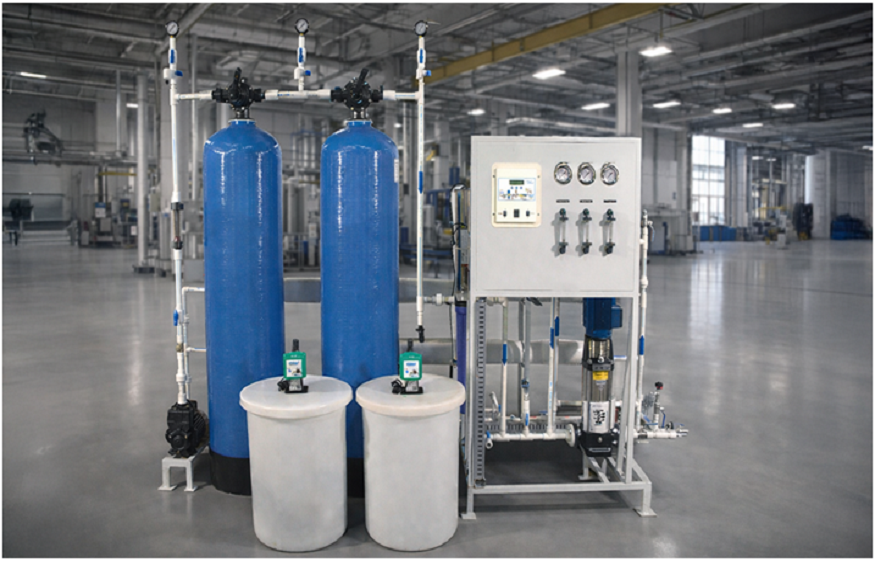
Buying an RO system is a long-term investment. Whether used in commercial facilities such as educational institutions, healthcare centres, or manufacturing units, the right choice can improve water quality and operational efficiency.
Asking the right questions before making a purchase can help you select a solution that matches your water conditions, daily demand, and budget. A little research before buying can prevent costly upgrades and maintenance issues later.
Q.1 What Is the Quality of the Existing Water Supply?
The first question to ask is about the quality of your water source. Water from borewells, municipal supplies, and tankers can have different levels of dissolved salts, hardness, and contaminants.
A water analysis report reveals key details about Total Dissolved Solids (TDS), chemical contaminants, and the presence of harmful microbes. A plant designed for moderately hard water may not perform efficiently if the water source has very high TDS levels.
Read More: Why Digital Signage is Essential for Modern Event Experiences
Knowing the quality of your water makes it easier to select the appropriate treatment method and system setup.
Q.2 What Is the Daily Water Requirement?
Daily water consumption plays a major role in selecting a suitable RO plant. An undersized system may struggle to meet demand, while an oversized unit can unnecessarily increase operating costs.
Estimate your daily requirement based on the number of users. A school, for example, may have different requirements than a factory or an office building.
Q.3 Which RO Plant Capacity Suits Your Requirements?
Capacity should match both your daily consumption and peak-hour usage periods. Ask suppliers about production capacity and recovery rates.
Generally,
- RO plant with 250 LPH (litres per hour) can provide clean drinking water to approx 550-650 people.
- RO Plant with 500 LPH (litres per hour) can provide clean drinking water to approx 1000-1300 people.
- RO plant with 1000 LPH (litres per hour) can provide clean drinking water to approx 2100-2700 people.
Q.4 What Maintenance, Service, and Operating Costs Can You Expect?
The initial investment is only one part of the investment. Apart from this, regular maintenance, membrane replacement, filter changes, and electricity consumption contribute to the total cost of ownership.
Ask about the service schedules, spare part availability, and annual maintenance support. Additionally, reliable after-sales service often makes a significant difference in long-term performance and system reliability.
Q.5 Does the RO Plant Meet Quality, Safety, and Compliance Standards?
A quality RO system should meet applicable industry standards and safety requirements. Look for certifications, quality testing procedures, and compliance with relevant regulations.
Reputed manufacturers provide clear product specifications, such as performance data, online and offline service support. These details help build confidence in the system’s effectiveness and durability.
Conclusion
A well-suited RO plant can only be identified after you have taken into account all of the following: water quality, daily water demand, system capacity, maintenance obligations, and compliance requirements. Spending time to assess each of these factors can make a real difference in the long-term reliability of your chosen system.
A well-suited RO plant can only be identified after considering water quality, daily water demand, system capacity, maintenance obligations, and compliance requirements. Spending time to assess these factors can make a real difference in the long-term reliability of the chosen system. For institutions and commercial facilities planning broader water infrastructure upgrades, evaluating associated expenses such as the water cooler price can also support better budgeting and more informed investment decisions.